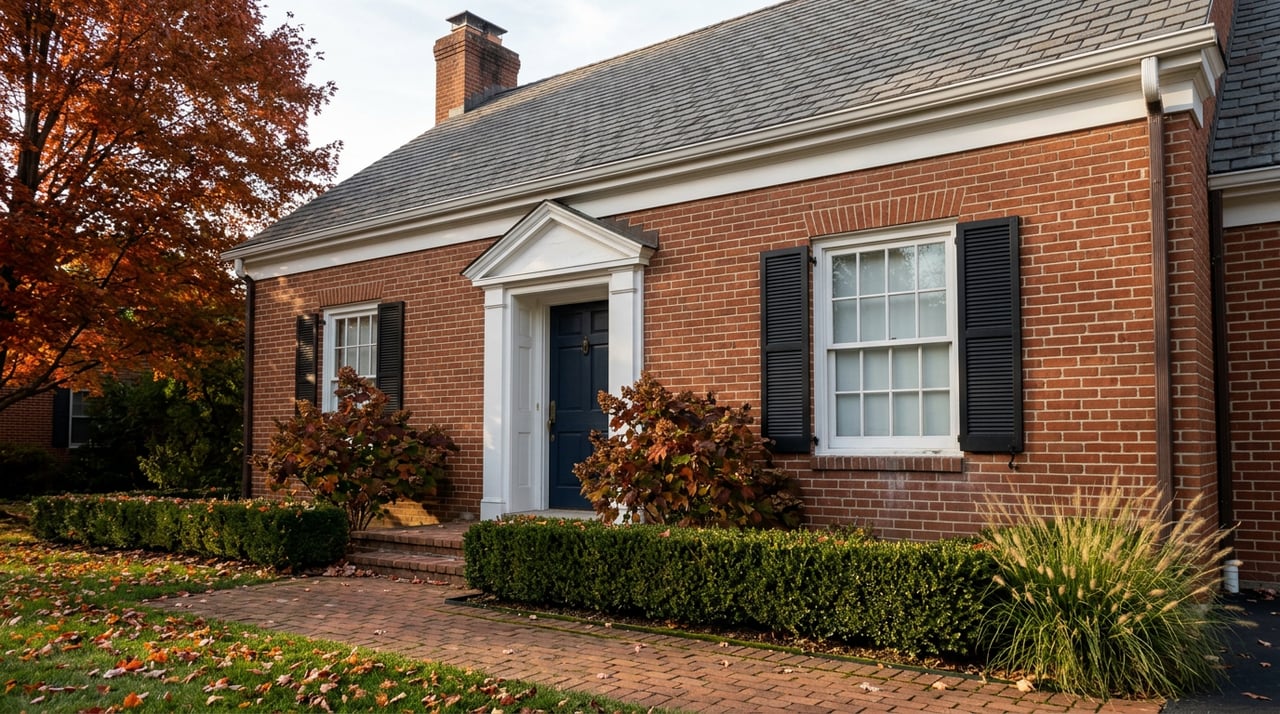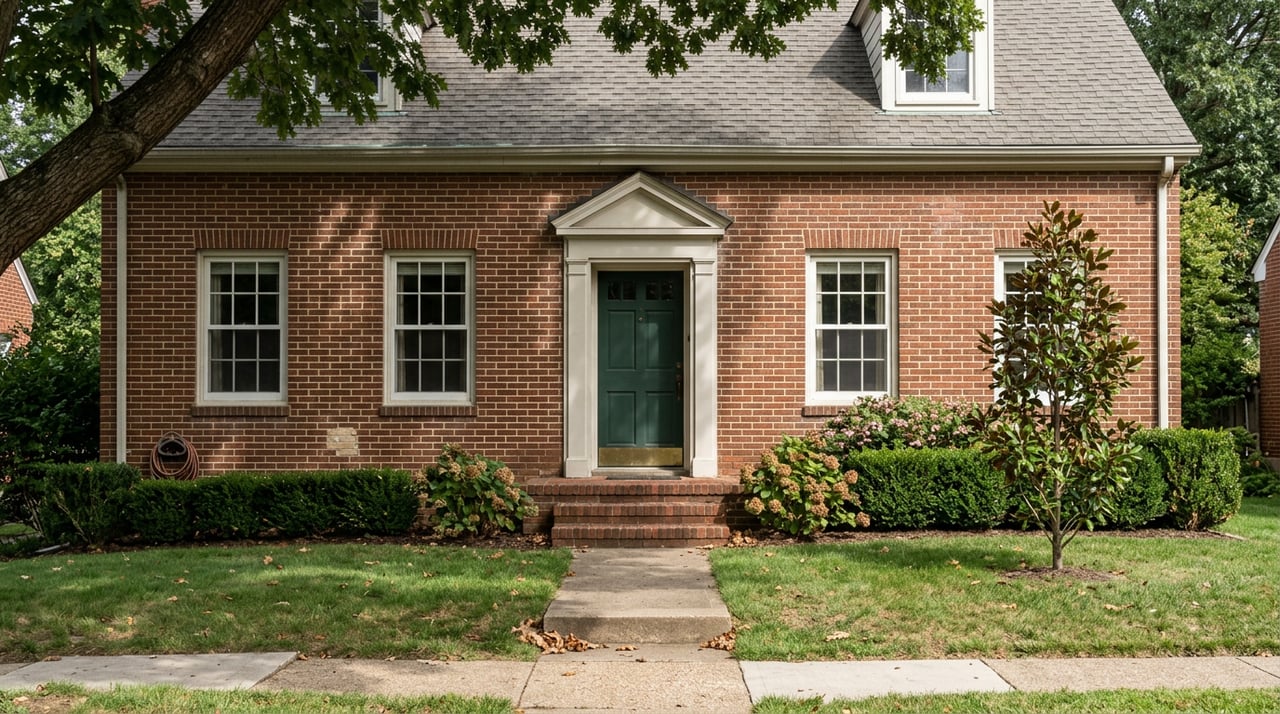
Picture two brick colonials half a mile apart, both listed as "Falls Church, VA." Same style, same era, same asking price range. One owner just opened a tax bill that's higher than last year's, thanks to a rate set by a seven-member City Council. The other owner's bill moved because of a rate set by the Fairfax County Board of Supervisors, a body that governs more than a million people and has never held a meeting inside the address on the listing sheet. Neither yard sign says which government is which. That's the part almost no one checks before they fall for a kitchen.
The Address Doesn't Say Who Taxes You
"Falls Church" names two different things, and only one of them is a city. The independent City of Falls Church is a real municipality with its own council, its own school system, and its own budget calendar. But a much larger ring of Fairfax County, including pockets known locally as Merrifield, Seven Corners, and Bailey's Crossroads, uses a Falls Church mailing address even though those homes sit in Fairfax County. The postal service assigned the name for delivery convenience decades ago. It has nothing to do with who sets your tax rate, who plows your street, or which school bus stops at your corner.
There are a few concrete tells. The primary City of Falls Church zip code is 22046, with a handful of properties in 22042, 22044, and 22205, while 22040 is reserved for post office boxes. Street name is another clue: addresses on Leesburg Pike, Route 7, Arlington Boulevard, Route 50, Lee Highway, or Route 29 are likely outside the City limits, even when the mailing city reads "Falls Church." If a listing sits on one of those corridors, assume county jurisdiction until a parcel lookup proves otherwise.
The Rate on Your Tax Bill Depends on Which Government You Ask
Falls Church City Council just finished its FY2027 budget cycle, and the headline sounds like relief. On a 6-1 vote, Council members reduced the current real estate tax rate from $1.185 per $100 assessed valuation to $1.18 per $100. But a lower rate isn't the same as a lower bill. Homeowners will still see higher tax bills, a median increase of $557, owing to assessments that increased an average of 6.2%.
Compare that to Fairfax County. The Board of Supervisors' most recently confirmed base real estate rate is $1.1225 per $100 for fiscal 2026, just under six cents lower than the City's newly adopted $1.18 rate for fiscal 2027. On a $900,000 assessment, that gap works out to just over $500 a year in base tax alone, before either jurisdiction's separate fees enter the picture. That gap is easy to miss when a listing photo doesn't come with a parcel map.
| City of Falls Church | Fairfax County | |
|---|---|---|
| Most recently confirmed real estate tax rate | $1.18 per $100 (fiscal 2027, adopted May 2026) | $1.1225 per $100 (fiscal 2026) |
| Sets the rate | Falls Church City Council | Fairfax County Board of Supervisors |
| School system | Falls Church City Public Schools | Fairfax County Public Schools |
| Primary zip code | 22046 | 22041-22044, among others |
The Fees the Rate Doesn't Show
The tax rate is only the headline. City-specific fees are climbing on top of it for FY2027, and none of them show up if you're pricing a home on the county side of the line. Sewer rates will increase 5% to $11.71 per 1,000 gallons, an average increase of $27 per household, trash-collection rates will increase 4%, representing a $10 to $12 increase per residential customer, and stormwater fees will increase 7%, an average of $23 per homeowner. Stack those on the tax increase and a City homeowner is absorbing several distinct line-item hikes in a single year, each set by a different city department, none of which apply the same way to a Fairfax County parcel a few blocks away.
Council member Erin Flynn framed the balancing act plainly during the May vote, saying "it's important to be responsible to residential homeowners' burden" given ongoing economic pressure on the region. It's also worth knowing the person who has steered this budget cycle for years is on the way out. The fiscal 2027 budget is the last for City Manager Wyatt Shields, who will retire in September, meaning the next budget cycle will be the first under new leadership, a detail worth watching if you're planning to own inside the City for the long haul.
Same Name, Different Schools
The tax line and the school line aren't drawn in exactly the same place, but they follow the same logic: jurisdiction, not mailing address, decides everything. Homes within the City of Falls Church, primarily ZIP 22046, are assigned to Falls Church City Public Schools, a small independent district with approximately 2,800 students and schools including George Mason High School. Step across the boundary and the assignment changes entirely. Homes in Fairfax County areas with a Falls Church mailing address attend Fairfax County Public Schools, with specific school assignments varying by address.
That variation can be more granular than buyers expect. FCPS notes that Region 2 includes the Falls Church, Justice, and McLean pyramids, which helps explain why nearby addresses can have different school assignments even when they sound like they are in the same place. Two homes with identical "Falls Church, VA" mailing addresses, a few blocks apart, can land in entirely different school pyramids depending on the parcel line, not the neighborhood name.
Why a City-Wide "Median Price" Doesn't Travel Far
Here's the part that trips up buyers who think they've done their homework by checking the median. Falls Church is a small city, just over two square miles, and that shows up in the transaction count. Sales across Falls Church for the first half of 2026 totaled 99, up from 83 a year before. Ninety-nine sales across six months, citywide, is a small enough pool that a handful of high-end closings can swing the median noticeably in either direction.
Even so, the City's numbers for that stretch were striking. The city's per-square-foot sales price of $530 was tops in the region for the first half of the year, and Falls Church led in median sales price during the six-month period, at $1,015,000, up 2%, compared with Arlington at $806,000. That's a meaningful gap, and it's the kind of number that gets quoted on its own without the context that it's built from fewer than 100 sales spread across a city with two very different tax and school jurisdictions folded into one small footprint. Total assessed value inside the City grew too: the total taxable assessed value of all properties as of January 1, 2026 reached $6,858,096,600, an increase of $445.4 million, or 6.9%, from the year before. Rising valuations and a tight sales sample together mean the headline median tells you the temperature of the market, not the address-level facts that actually determine your monthly payment.
How to Check Before You Write an Offer
- Look up the exact address using the City of Falls Church's own address-lookup tool before assuming a listing sits inside city limits.
- Note the zip code. 22046 is the core city zip, but border zips like 22042 and 22044 straddle both sides of the line.
- Watch the street name. Major corridors named above tend to fall outside city boundaries even with a Falls Church mailing address.
- Ask which school pyramid a specific parcel feeds into rather than assuming based on the neighborhood name alone.
- Request the current tax rate and any fee schedule for the exact jurisdiction, not a citywide average, before comparing two listings side by side.
The Bottom Line
A "Falls Church, VA" address tells you almost nothing about which government will tax you, which fee schedule you'll be on, or which schools your household will be zoned for. Those answers live at the parcel level, not the mailing label, and the difference between them, currently just under six cents per $100 in tax rate alone, plus a separate set of city-only fee increases, is large enough to change what a home actually costs to hold for the next ten years.
This is exactly the kind of boundary question a broker who works this market every day catches before it becomes a surprise at settlement. Beltran & Associates Realty verifies jurisdiction, school assignment, and current tax exposure as a standard part of touring any Falls Church-area listing, whether it sits inside the little city or just outside it. Browse the full Falls Church neighborhood guide, work through the buyer's guide, or get a current home valuation before you shop. Talk with a local broker today.
FAQ
Does a "Falls Church, VA" mailing address always mean the property is inside the City of Falls Church? No. Large sections of Fairfax County, including areas known locally as Merrifield, Seven Corners, and Bailey's Crossroads, carry a Falls Church mailing address while sitting entirely under Fairfax County jurisdiction for taxes, schools, and services.
How much more will I pay in real estate tax inside the City versus the surrounding county? The City's newly adopted fiscal 2027 rate is $1.18 per $100 of assessed value. Fairfax County's most recently confirmed base rate, for fiscal 2026, was $1.1225 per $100. On a $900,000 assessment, that roughly six-cent gap works out to just over $500 a year before either jurisdiction's separate sewer, stormwater, or trash fees are added.
How do I find out which jurisdiction a specific address belongs to? Use the City of Falls Church's official address-lookup tool to confirm whether a parcel sits inside city limits. If it doesn't, the property falls under Fairfax County for taxes and Fairfax County Public Schools for enrollment, and a broker or the county's own records can confirm the exact school pyramid.