Selling a historic Alexandria rowhome can feel like a balancing act. You want your home to feel fresh and inviting for today’s buyers without losing the character that makes it special in the first place. The good news is that smart staging can do both, and it can also help buyers picture themselves living there. Let’s dive in.
Why staging matters in Alexandria
Historic rowhomes in Alexandria often stand out because of their charm, scale, and architectural details. In areas like Old Town and Parker-Gray, many homes are small row houses, townhouses, or townhouse-like properties, which means presentation matters even more when you are working with a narrower footprint.
Staging is not just about decorating. It is about helping buyers understand how the home lives, how the rooms connect, and what makes the property feel both functional and memorable. According to the National Association of Realtors 2025 Profile of Home Staging, 83% of buyers’ agents said staging makes it easier for buyers to visualize a property as a future home.
That matters because buyers usually start online. The same report found that photos, videos, virtual tours, and physical staging all play a major role in how buyers respond to a listing.
Start with Alexandria’s historic context
If your rowhome is in Alexandria’s Old and Historic District or the Parker-Gray district, it helps to think of staging as reversible presentation, not visible remodeling. The City of Alexandria regulates exterior changes in these districts through the Board of Architectural Review, also called the BAR.
BAR approval is required for new construction and exterior alterations that are visible from a public street, way, place, or the Potomac River. The same review framework also applies to designated 100-year-old buildings. In practical terms, that means your pre-listing work should focus on cleaning, repairs, styling, and maintenance rather than making exterior changes that could raise approval questions.
Highlight character, not clutter
Historic rowhomes often have details that buyers love, but those details can disappear when rooms feel crowded or heavy. Alexandria’s preservation guidelines place importance on features like windows, doors, shutters, railings, stoops, porches, chimneys, roofs, light fixtures, and materials that reflect the city’s architectural heritage.
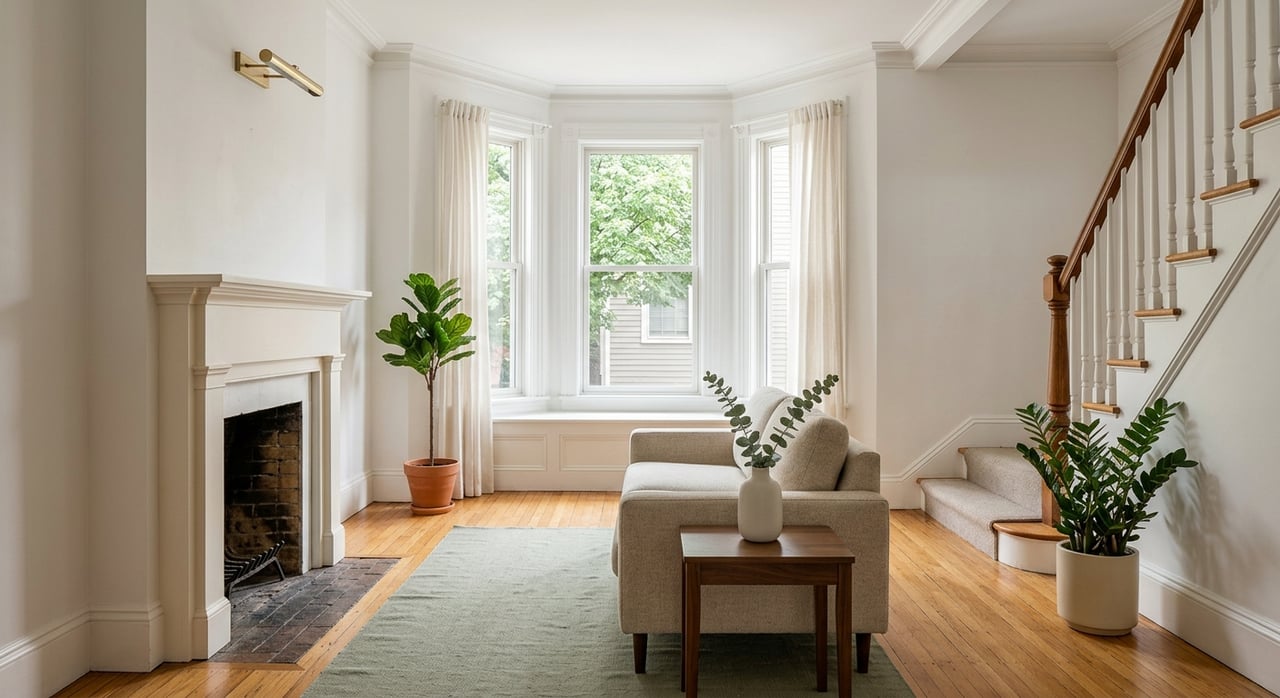
For staging, your goal is to let those features breathe. If your home has original trim, a fireplace, stair rails, transoms, masonry, or built-ins, keep them visible and easy to notice. A clean, edited room will usually do more for a historic home than adding more accessories.
What to remove first
When preparing a historic rowhome, start by editing anything that hides the home’s lines and proportions.
- Oversized furniture that blocks walkways
- Heavy drapery that covers window shape or light
- Excess decor on mantels, shelves, or ledges
- Extra chairs or side tables that make rooms feel tight
- Personal items that distract from the architecture
The goal is not to make the home feel empty. It is to make it feel open, light, and easy to understand.
Focus on the rooms buyers notice most
Not every room needs the same level of attention. The 2025 NAR staging report found that buyers’ agents viewed the living room, primary bedroom, and kitchen as the most important rooms to stage. The most commonly staged rooms were the living room, primary bedroom, dining room, and kitchen.
That is especially useful in an Alexandria rowhome, where square footage may be more compact and each room needs to work harder in person and in photos.
Living room
The living room often sets the tone for the whole showing. Use seating that fits the scale of the room and leaves clear paths to windows, doors, and stairs. If there is a fireplace or built-in shelving, treat that as a focal point instead of competing with it.
Primary bedroom
Buyers want the bedroom to feel restful and functional. Keep bedding simple, add balanced nightstands if space allows, and avoid too much furniture. In a smaller historic home, showing breathing room around the bed can make the space feel larger.
Kitchen
The kitchen should feel clean, bright, and efficient. Clear counters as much as possible, leaving only a few practical accents. If the kitchen connects to a dining area or rear patio, use staging to suggest an easy flow between those spaces.
Dining area
Many rowhomes have dining spaces that sit between the front and rear of the home. A right-sized table can help define the room without crowding circulation. Keep the setup simple so buyers can see the room’s shape and flexibility.
Work with the rowhome layout
Alexandria rowhomes often have a narrow footprint and a clear front-to-back circulation path. Instead of fighting that layout, staging should support it.
Keep the entry, living area, stair hall, dining area, and rear outdoor space visually connected. This helps buyers experience the home as a smooth sequence rather than a set of tight compartments.
Use scale to your advantage
Furniture scale matters more in a rowhome than in a larger detached property. Choose pieces that leave open sightlines and clear walking paths. In many cases, fewer pieces will make the home feel larger and more usable.
Keep light moving
Historic homes can feel darker if furniture, window treatments, or clutter interrupt natural light. Open curtains, simplify window areas, and make sure lamps and bulbs create a warm, even glow. Buyers should notice the rhythm of the windows and doors, not what is blocking them.
Do not overlook curb appeal
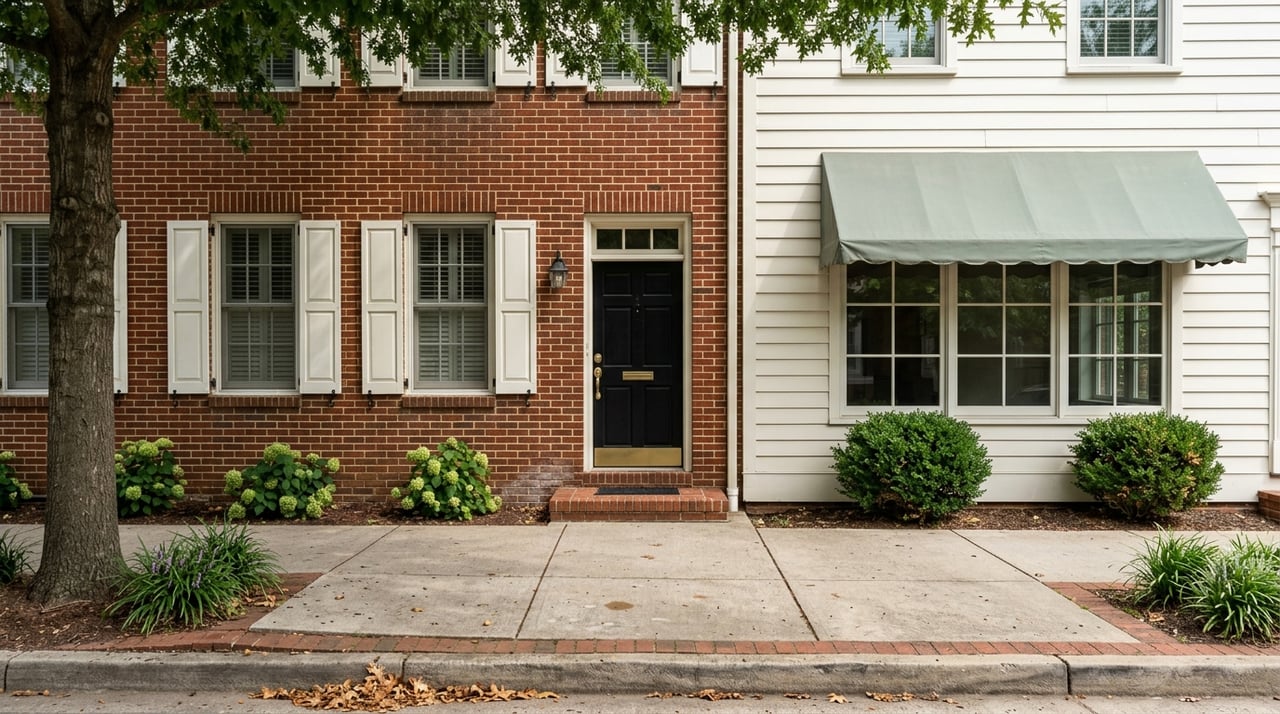
The front exterior of a historic rowhome creates an immediate first impression. In Alexandria, that can include the stoop, steps, railings, front landing, shutters, planters, and entry door.
You do not need a dramatic change to make an impact. A careful cleanup can go a long way, especially in a district where architectural details already carry so much character.
Simple curb appeal steps
- Sweep the stoop and steps
- Clean the front door and hardware
- Tidy planters and containers
- Remove seasonal clutter or worn decor
- Make the front landing feel neat and welcoming
According to the 2025 NAR report, sellers’ agents commonly recommend improving curb appeal before listing. For a historic Alexandria rowhome, that is one of the easiest ways to create a polished first impression without changing the home’s character.
Make outdoor space feel like extra square footage
Small rear patios, courtyards, or gardens can be a major selling point in a rowhome. Buyers often respond well when outdoor space feels usable rather than overlooked.
Even a compact area can read as valuable living space with the right setup. A small bistro table, two chairs, or a simple bench can help define purpose. Clean surfaces, trimmed greenery, and a clear path to the door can also make the space photograph better.
Prioritize cleaning and decluttering
Before any styling happens, the basics need to be done well. The NAR report found that decluttering and entire-home cleaning were among the most common recommendations sellers’ agents made before listing.
This matters even more in historic homes, where age and charm can be mistaken for wear if the home is not spotless. Clean brick, polished floors, dust-free trim, and fresh-smelling interiors help buyers focus on the home itself instead of maintenance concerns.
Think digital first
Many buyers will meet your home online before they ever step inside. That means staging should be planned not just for showings, but also for photography, video, and virtual tours.
The 2025 NAR report found that buyers’ agents said photos were especially important to clients, along with videos, virtual tours, and physical staging. In a historic Alexandria rowhome, strong visuals can help buyers understand room flow, ceiling height, window placement, and outdoor connections.
What photographs well in a rowhome
- Clear sightlines from front to back
- Clean, bright kitchen counters
- Balanced furniture layouts
- Visible architectural details
- Tidy outdoor areas with defined use
This is one reason broker-led guidance can make a difference. A thoughtful listing plan can help sequence your prep so the home looks its best both online and in person.
Know what staging can and cannot do
Staging can improve presentation, support marketing, and help buyers connect emotionally with the home. It can also contribute to stronger results. In the 2025 NAR report, 19% of sellers’ agents said staging increased the dollar value offered by 1% to 5%, and 30% said staged homes saw slight decreases in time on market.
Still, staging is not a substitute for historic district approvals or for deferred maintenance that needs attention. If you are considering any exterior work visible from public space, Alexandria’s review requirements still apply. A good plan respects both the home’s marketability and its historic setting.
A smart staging plan for Alexandria sellers
If you want a practical way to approach the process, keep it simple and staged in the right order.
Step 1: Clean and declutter
Start with a full-home reset. Remove extra furniture, clear surfaces, deep clean every room, and make historic details easier to see.
Step 2: Refine the priority rooms
Put the most effort into the living room, primary bedroom, kitchen, and dining area. These spaces do the most work in listing photos and buyer walkthroughs.
Step 3: Improve exterior presentation
Freshen the stoop, landing, and front entry. Then make any rear patio or garden feel usable and well-kept.
Step 4: Prepare for media
Before photos and video, check lighting, simplify styling, and make sure each room has a clear purpose. Buyers should be able to understand the home quickly from the listing itself.
Step 5: Stay preservation-aware
If your home is in a local historic district, keep staging decisions reversible and separate from any exterior project that may require BAR review. That helps you avoid confusion during your pre-listing prep.
Historic Alexandria rowhomes already have a story to tell. The right staging simply helps buyers see it more clearly, with less distraction and more confidence. If you are preparing to sell in Alexandria and want broker-level guidance on pricing, presentation, and marketing, connect with Karina Srebrow for a local, thoughtful plan.
FAQs
What is the best way to stage a historic Alexandria rowhome?
- Focus on decluttering, deep cleaning, right-sized furniture, and highlighting original architectural details without making visible exterior changes.
Do Alexandria historic districts have rules that affect staging?
- Yes. If your home is in a local historic district, exterior alterations visible from public space may require Board of Architectural Review approval, so staging should stay focused on reversible presentation.
Which rooms matter most when staging a rowhome for buyers?
- The living room, primary bedroom, kitchen, and dining area usually deserve the most attention because buyers notice them most in photos and showings.
How can I make a narrow rowhome feel bigger?
- Use fewer, properly scaled furnishings, keep walkways open, and maintain clear sightlines from front to back so the home feels connected and easy to move through.
Does outdoor space matter when selling an Alexandria rowhome?
- Yes. A clean stoop, tidy front landing, and usable rear patio or garden can improve first impressions and make the home feel more functional.
Why is digital presentation so important for Alexandria home listings?
- Buyers often start online, and strong photos, video, virtual tours, and thoughtful staging help them understand the layout, character, and flow before they visit in person.